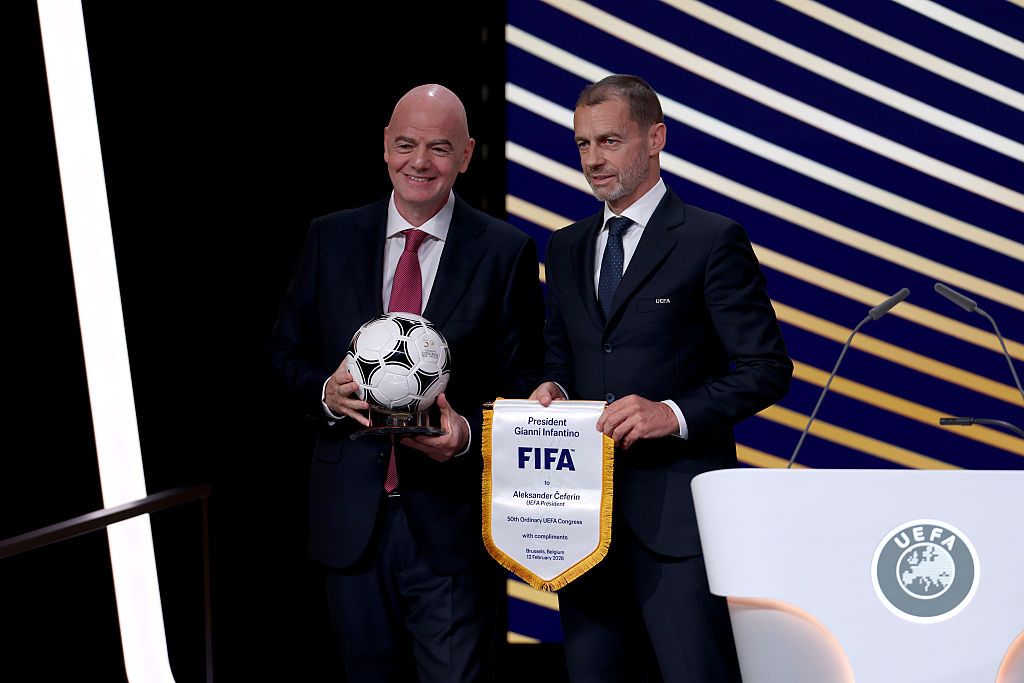
FIFA's proposal to fundamentally restructure the World Cup format has collapsed, yet the political maneuvering behind the scenes reveals UEFA's calculated self-interest in maintaining continental control. The European confederation's resistance to FIFA's ambitious expansion plans masks a deeper agenda to preserve their own competitive hierarchy, particularly the Champions League's dominance as football's premier club competition. While FIFA quietly shelved their restructuring blueprint, UEFA's opposition demonstrates that European football's governing body prioritizes protecting their revenue streams and competitive structure over genuine sporting progress, a stance that contradicts their public positioning as defenders of football's traditional values.
The failed expansion scheme exposed fundamental conflicts within global football governance. FIFA had proposed increasing the World Cup from 32 to 48 teams, fundamentally altering qualification pathways and continental representation since 1998 when France hosted the 32-team tournament. UEFA, representing 55 member nations across Europe, feared diminished European dominance and altered qualification dynamics that could affect top-ranked teams' tournament access. This protective mechanism reflects UEFA's historical control—European nations have won 11 of 22 World Cup tournaments, with Germany, Italy, and France combining for seven titles. UEFA's locked blueprint documents reportedly detailed contingency strategies to maintain European influence regardless of FIFA's structural changes, revealing their predetermined positions before genuine dialogue began.
The collapse of FIFA's restructuring initiative signals prolonged uncertainty for global football's competitive framework. Future World Cup formats remain undefined, leaving continental confederations, clubs, and national federations operating without clarity on tournament structure beyond 2026. UEFA's successful blockade of meaningful reform raises questions about whether legitimate competitive modernization can occur when entrenched power structures control decision-making processes. The 2026 World Cup in the United States will proceed with expanded 48-team participation across three nations, but without comprehensive global governance reform, similar conflicts will inevitably resurface as football's financial stakes continue escalating across all competition levels.